America 250: A Reckoning
Mythologizing ourselves to cover atrocities

There was such a great reaction to this recent piece by Josh Caress that I brought him back again to take a look at [this thing of ours voice] the United States of America at 250 years old.
 Luke O’Neil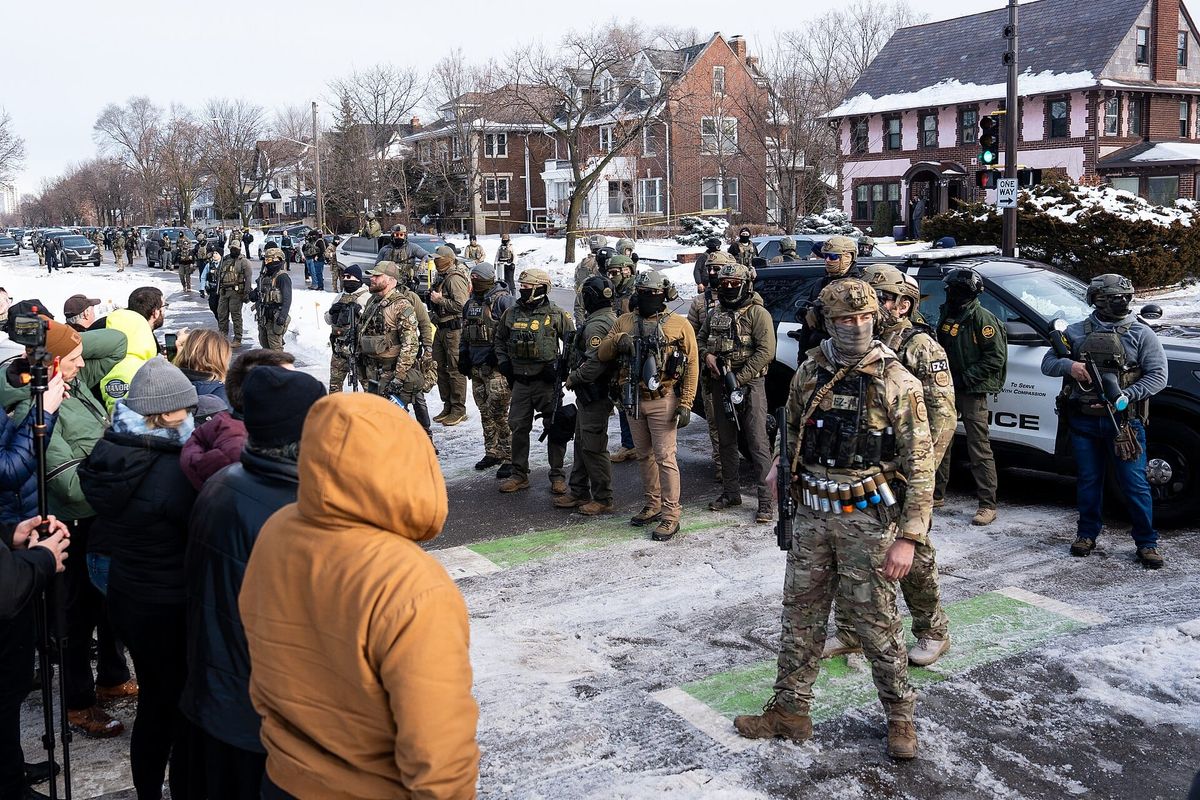
"There has never been a time in American history when our country was not mythologizing itself to cover atrocities," he writes today.
"More than any other nation, America is an idea. And that idea is a phantasm, a collective dream, or—more plainly—a fantasy."
"At every turn, embracing American identity has meant choosing a false reality over a true one. This is how the nation was conceived, how it has operated, and what it continues to do. This is what settler colonialism is: the forced replacement of reality with fantasy. This is also why the fantasy is indispensable. To question it is to unravel the whole thing. And so every time a crack is revealed, there are always those ready to plug the hole with new iterations of the myth. We can’t let it go."
"If we were able to let go of our myths, our exceptionalism, our relentless reification of whiteness, we’d find that we really do have the potential for something special here. Not because of the ideas of slaveholding white men 250 years ago, but because of our vibrant diversity of peoples and cultures—the very thing our power structures seek to eradicate."
It's a long one but very good. You'll need to be paid to read the whole thing. Thank you as always for your support.
With the horrifying racist pogroms going on this week in Northern Ireland a reminder to also read this recent piece by Hussein Kesvani.
 Luke O’Neil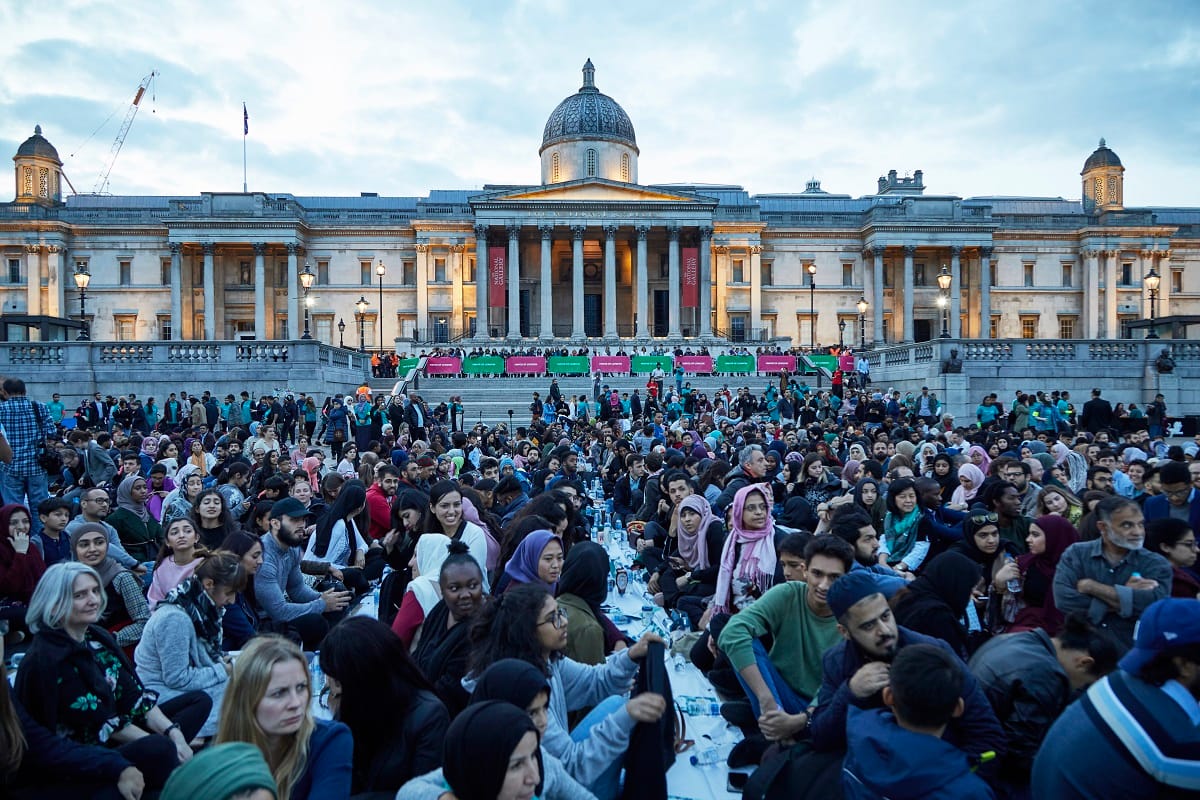
"Speaking to Muslim family and friends who have seen a marked rise in anti-Muslim hostility and attacks, both in the news and in their personal lives, all while existing on an internet where anti-Muslim content, misinformation and Islamophobic AI slop have become so common as to be unremarkable, a common sentiment emerges: Yes, we’ve been dealing with Islamophobia for a long time, and for many of us who grew up in the shadow of 9/11, it has lurked in the background of our formative years. But this time something feels different. We’re now dealing with an Islamophobia that’s far more abstract, fixated on Western civilizational collapse as an opportunity to instill racial purity, and far more sinister in its intentions."
A couple years ago Simon Childs wrote for Hell World about similar racist and xenophobic violence in the UK that helps explain how the country got to this point.
 Luke O’Neil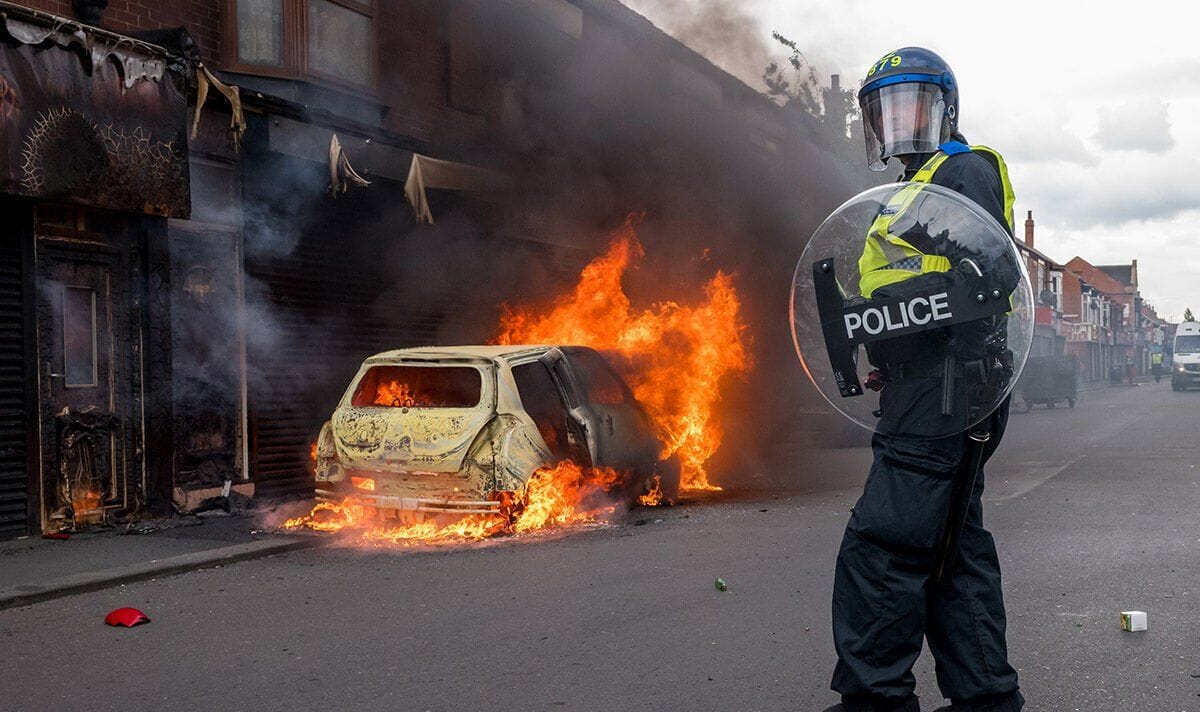
"This new form of far-right organizing hasn’t sprung up overnight, but it has gone into overdrive in recent months. Until recently, Robinson was a busted flush. He was banned from Twitter for breaking its rules on hateful content and had become basically irrelevant. But in November of last year the platform’s new owner Elon Musk reinstated his account. Musk lately has been signal boosting Robinson’s content and saying that a race war in the UK is "inevitable.'"
"Musk has re-invigorated the far-right Twittersphere. Meanwhile the right-wing of British politics has careened even further right, and its media has become even more shrill and apocalyptic in its tone."
America 250: A Reckoning
by Josh Caress
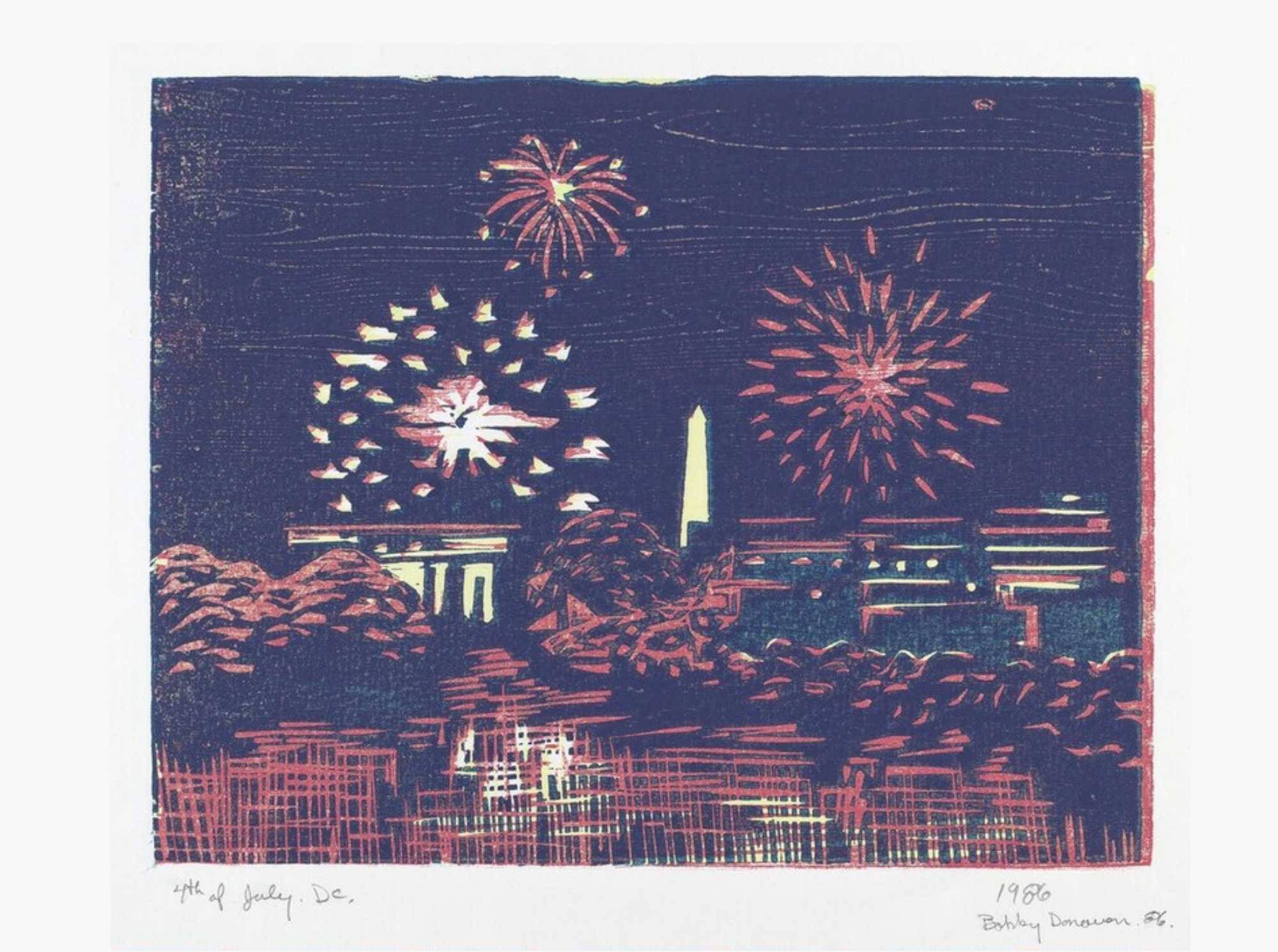
Sandy, the fireworks are hailin' over Little Eden tonight. Forcing a light into all those stoned-out faces left stranded on this Fourth of July.
-Bruce Springsteen, “4th of July, Asbury Park (Sandy)”
The dark blue of the dusk faded late in Michigan. Here mid-summer could delay the full onset of night past ten o’clock. So the kids—like me, gathered on the beach with their families—always delighted in the extended revelry of the Fourth of July.
The beach turned into shadow—bodies moving like ghosts against the backdrop of the lake, silhouettes of trees towering like sentinels atop the dunes, bonfires unfurling along the shoreline. Finally a fire of our own so we could see each other’s faces.
They flicker orange now in my recollection—Mom, Dad, my brother, some aunts, uncles, and cousins—laughing and singing “Barbara Ann.” I didn’t understand it as anything but nonsense then, much like my mom humming “Stars and Stripes Forever” in trumpet noises as I lit my sparkler. I only knew the melody as the soundtrack for this moment of wonder, with the sputtering flame glowing in my hand.
We roasted marshmallows and watched the fireworks explode over the lake, reflecting in a rippling shimmer. I remember this is when I first heard the term “grand finale,” as the cacophony of light and sound brought the evening to a close. The high feast of summer, a marker of time in the endless days of childhood.
I’ve been thinking a lot about the mythology of white America, how we got here, and what we can do to break its hold. “America 250” is upon us—which means I’ve lived through nearly one fifth of that history—and as I continue to untangle myself from the trappings of “patriotism,” I keep coming back to memories like the one above.
I was born during the Carter administration, at the tail end of one of the most progressive swings in American history. Many of us are more aware now—of both the lies we were taught and the truths they covered over—but that hasn’t seemed to shake us free. Rather, my entire lifetime has been marked by the integration of these uncomfortable truths into a liberal vision of democratic progress. We keep retooling the story to make it fit—we need to make it fit. That’s not who we are, we say, against all evidence to the contrary. But why?
The short answer is that so many white Americans have stories like mine, where amorphous ideas of “America” were entangled with other feelings, inculcated through repetition, and planted in the fertile soil of our childhood imaginary. Other such attachments seem to fade as we grow up, while this one is constantly reaffirmed, entrenching itself in our psychic foundations. Why does it feel so personal, so intrinsic to our identity? So much so that we would let things come to the verge of total collapse rather than let it go?
The Phantasm
In Who’s Afraid of Gender?, Judith Butler asserts that the burgeoning right-wing anti-gender movement works by creating a “phantasm,” built on people’s fears and anxieties. This phantasm operates beyond any objective reality, taking on a power of its own that short-circuits rational thought. Once a “phantasmic scene” like this is empowered, fighting against it requires striking at its roots—the fears, anxieties, and “cultural codes” that Butler says “enter into the most primal fantasies where there is no clear way to dissociate the unconscious from the work of the cultural.”
I would argue that “America” itself is a phantasm of a different kind, creating its own “phantasmatic scene.” In one sense, it is objectively a nation-state with a land base and a system of government, yes. But America is also something else. How often have we heard the phrases? The “American Experiment.” The “City on a Hill.” The “American Adventure,” even. More than any other nation, America is an idea. And that idea is a phantasm, a collective dream, or—more plainly—a fantasy.
It goes something like this:
In a time of absolute monarchs and religious intolerance, a brave contingent of enlightened Europeans set out across the sea to build something new, free of tyranny. In a wild and untamed land full of beauty and untapped resources, they started a country from scratch, without all the baggage of Old World Europe. What they established was a new experiment, never before seen in human history—a nation of laws, not kings, where everyone was equally free to pursue their dreams of happiness.
With great foresight, they established a Constitution to preserve the nation, one that could be changed over time to reflect the will of the people. Because of this, we were able to eventually overcome the great sin of slavery and move closer to the ideals the Founding Fathers truly intended. Brave and rugged Americans went west, tamed the frontier, and built the railroads, clearing the way for progress from sea to shining sea.
American freedom became a light to the world, spreading the noble idea of democracy until all monarchies crumbled and all oppressed people longed for freedom of their own. Immigrants and refugees came here to live out that American dream, and we welcomed them with open arms. Together, we built the most powerful nation on earth, respected by all for the light that it shone. By this light, we vanquished the Nazis, liberated Europe, and saved the South from Jim Crow. Our ingenuity and innovation then built the middle class, won the Space Race, and toppled the Soviet Union, bringing us here—finally—to the end of history.
The story you grew up with may have differed here and there, but that’s the gist of it, right? Even when the facts of Indigenous genocide, chattel slavery, or ongoing systemic racism are reluctantly acknowledged, they are presented as evidence of American progress—how far we’ve come, always getting closer to “living up to our founding principles.” Freedom and equality—these are what make America great. And that’s something you should be proud of.
The problem is, of course, that almost nothing about this fantasy is true. This land is not ours. Americans didn’t “tame” it, they destroyed a balanced ecosystem cultivated over thousands of years. They didn’t create an egalitarian society, they systematically dispossessed and disempowered the ones already here. They didn’t build wealth by “working hard,” they forced millions of enslaved people to work for them on stolen land. The only true innovation of the United States of America was its unprecedented commitment to unbridled cruelty and total domination over others.
Why is it so hard for white Americans to come to terms with this reality? To see through the phantasm? Perhaps the real genius of the “Founding Fathers” (and those who carried on their legacy) was their penchant for mythmaking. The story of “America”—and “Western Civilization” itself—was invented almost entirely out of whole cloth, then inculcated (often by force) for over two hundred years. By the time I sat on that beach for the Fourth of July fireworks in the 1980s, white Americans could scarcely imagine any other story. Many of us still can’t.
Building a Fantasy: The True Story
During the “age of exploration,” European empires established colonies around the world, founded on the Doctrine of Discovery. This doctrine, proclaimed by Church decree, gave Christian monarchs the imprimatur of absolute authority to claim any lands inhabited by non-Christians, put them to their use, and “reduce their persons to perpetual servitude." They would all soon be competing for claims in North America.
Two hundred and fifty years after Columbus, British settlements remained primarily on the Atlantic coast. Though France and Spain still “claimed” much of the interior, they mostly had only trading outposts to show for it, due to the strength and diplomacy of the Indigenous nations. The British colonies had grown prosperous through the combination of stolen land and enslaved labor, but after fighting the French and Indian War, England itself was reluctant to push settlement past the treaty line of the Appalachian mountains. This would risk more conflict with powerful Indigenous confederacies—not to mention France and Spain. Neither the Crown nor Parliament thought it was worth it, at least not yet.
Enter the “Founding Fathers.” The men responsible for the American Revolution and the invention of the United States had a number of converging interests that stemmed from their position as land-owning (and slave-owning) capitalists. As we know, capitalism requires continual growth, and the colonies were not growing fast enough for them. They needed more land and more production. Here was an entire continent wide open for the taking—more land than they ever could have imagined. Why should their British overlords hold them back?
Many of these men, including George Washington, were already heavily invested in speculating on Indigenous lands that British treaties forbade them from settling. Moreover, the Somerset case back in England had threatened the basis of slavery under British law. These were two of the driving factors behind the founders’ push for independence.
This is not the story America tells about itself, and it’s not the one the founders told either. Even in the midst of their revolt, many of them—as they gazed out to the west—were already dreaming of a new story, one that would make them immortal. They needed to be taken seriously, to show Europe that they were not only their equal, but their rightful successor in global supremacy. For their new “origin story,” they needed both an anchor to the past and a vision of a future beyond the Old World. So they began constructing their myth.
What they concocted was the framework of “Western Civilization” (though that term wouldn’t arrive for another hundred years or more), inventing the concept of a shared white tradition stretching back to antiquity. Enlightenment ideals (many of which can be traced to Indigenous contact) were mixed with egalitarian Haudenosaunee governance structures, then filtered into a Greco-Roman image of “democracy,” claiming that classical foundation for themselves (along with its patriarchal hierarchy and approval of slavery).
Drawing on notions implicit in the Spanish Inquisition, along with racial attitudes honed in Irish colonization, American colonies had begun changing legal definitions from “Christian” to “white,” and from “heathen” or “pagan” to “black,” “Indian,” or “savage,” enshrining explicitly racial structures of domination. The American construction of what it meant to be “civilized” and “free” became forever entwined with whiteness.
Though the concept of “white” seemed simpler at that time—marked primarily by “not Black” or “not Indian”—the amorphous nature of such a category would become a primary lever of power in our country right up into the present moment. The conferring or withholding of “whiteness” on various groups or individuals, both explicitly and implicitly, became an intrinsic part of what it meant to be truly “American.” This lineage can be found in all struggles for citizenship, equal protection, and incorporation of rights for marginalized people, as well as its sublimation into our concepts of “normal.”
From the beginning, the phantasm of whiteness, once invoked, only grew stronger. With the creation and establishment of “neo-classical” architecture as the visual symbol of white authority, a new type of fantasy proliferated. While buildings, columns, and statues of “pure white” claimed the symbolic power of Roman emperors and Greek gods, although this too was a fantastical invention.
Over the course of the 1800s, these new constructs of American identity were tested, honed, shaped, reshaped, and mythologized again. While our myths cast images of pioneers on the prairie, cowboys in saloons, and “opening up the west,” they also include a romantic account of the Civil War and Abraham Lincoln “saving the Union.” But the real history of the American 1800s was staggeringly ugly.
While most of Europe moved toward abolition, the enslaved population of the United States only grew, with US cotton dominating the world market. At the same time, the justifications of slavery and codification of American whiteness gave rise to a veritable frenzy around race, including a whole new field of scientific racism, which lingers to this day. The phantasm of anti-Blackness is perhaps the most powerful and lasting one we have.
Above all, the American 1800s were an unprecedented time of genocide. As soon as the United States won their independence, they turned immediately to the west. President Thomas Jefferson laid it out in 1801: “However our present interests may restrain us within our own limits, it is impossible not to look forward to distant times, when our rapid multiplication will expand itself beyond those limits and cover the whole…continent.”
Between 1780 and 1880, the American government would dispossess nearly every single Indigenous nation on this vast continent, killing millions along the way. In the process, the United States built and honed a new kind of war machine based on “total war” tactics—massacring women, children, and elders; slaughtering millions of bison to destroy Indigenous lifeways; desecrating the dead and mutilating bodies; duplicity, lying, and cheating with treaties and promises. This would all become the model of US “counterinsurgency.”
But it wasn’t just the military. Every pioneering American was both encouraged and effectively deputized to carry out this ethnic cleansing, forever joining American identity with wanton violence and cruelty. NYU’s Cristina Beltrán writes:
“Frontier freedom represented an ongoing opportunity for white citizens to engage in practices of invasion, war, removal, and settlement. In this way, the American desire to claim freedom and resist tyranny was constituted through the imposition of tyranny and unfreedom on others. That America’s most powerful and affecting acts of civic creation were simultaneously acts of racialized violence is why it’s so difficult for certain white citizens to imagine future acts of creation not characterized by retribution, domination, and loss.”
The 20th century brought Mount Rushmore, carved by a white supremacist into a sacred Lakota site in the Black Hills. American academics introduced the study of “Western Civilization” to inculcate the narratives of white supremacy. The Civil War and Reconstruction were recast by historians as the “Lost Cause” myth. Popular culture romanticized the antebellum South and perpetuated “savage Indian" tropes in the Westerns produced incessantly from the dawn of the film industry. Little House On The Prairie was still on TV when I was a kid.
There has never been a time in American history when our country was not mythologizing itself to cover atrocities. At every turn, embracing American identity has meant choosing a false reality over a true one. This is how the nation was conceived, how it has operated, and what it continues to do. This is what settler colonialism is: the forced replacement of reality with fantasy. This is also why the fantasy is indispensable. To question it is to unravel the whole thing. And so every time a crack is revealed, there are always those ready to plug the hole with new iterations of the myth. We can’t let it go.
“Joy and Reaffirmation"
Following the upheavals of the 1960s and 70s—Civil Rights, the anti-war movement, second-wave feminism, Stonewall, the American Indian Movement—white America diverged into alternate mythologies. Conservatives viewed those movements as attacks on American identity, with their successes signaling a decline from greatness. In reaction to this, they built the movement we see bearing rottenous fruit today. Liberals, however, came away with a new myth.
Rather than reckoning with the foundational stories and the racist reality of the North, American liberalism instead incorporated the gains of the 60s into a vision of an evolving America, one where the founders’ great wisdom had yet to be fully realized. The problem with America was never the idea itself. Freedom, equality, democracy—that’s what America always stood for, even if it had failed to live up to it in the past. The story became one of progress, where the future can only get better.
This is the myth we’ve been living in, and if you’re reading this, it’s likely the one you’re most familiar with. My feelings about it are complicated. I’m thankful that I have a viscerally negative reaction to things like police attacking protestors, schools denying students’ free speech, and the brazen stripping of Black voting rights. In many ways, the liberal myths seemed to prepare us for this moment—at least for recognizing some of the bad guys. What they didn’t prepare us for was the fact that this progressive vision of America was never reality.
What if the whole appeal of MAGA is that it activates our foundational American identity? What if the “originalists” on the Supreme Court—invoking ideas “deeply rooted in our history” as they overturn abortion rights and voting rights—are simply reasserting the fundamental structures the country is based on? What if this nation founded on genocide, extraction, slavery, patriarchy, and white supremacy is simply doing what it has always done—what it was built to do—despite some brief interludes when its power was diminished? What if denying this reality is only giving them more power?
The real story of American progress was never one of fulfilling our destiny, but rather the natural response of oppressed human beings fighting against an imposed, unsustainable fantasy. Every movement for liberation in the United States—Indigenous sovereignty, abolition, labor rights, women’s rights, Black civil rights, LGBTQIA+ rights—has been waged directly against the foundations of what this country is, and every time, they have been accordingly met with the force of the state. Have you ever wondered why we’re never shocked to see violent cops in riot gear anytime marginalized people even peacefully assert their human dignity?
While liberals claim heroes like Martin Luther King, they forget that King and the Civil Rights movement were treated as domestic enemies by the US government, even under Johnson. Every Black-led movement since has been heavily surveilled, infiltrated, and had its leaders smeared, imprisoned or killed. Liberals love to remind us that America “defeated the Nazis,” without acknowledging that Hitler claimed inspiration from both our genocide of Native Americans and the apartheid South of Jim Crow.
New public revelations have been continually forthcoming—COINTELPRO, the Pentagon Papers, Watergate, Iran-Contra, the SSCI torture report, the Panama Papers, the Epstein Files—but nothing is ever done to address the structural power and impunity behind all of these things. American liberalism has no interest in threatening our institutions, only preserving their perceived integrity.
The primary purpose of the liberal myth has been an attempt to reconcile white Americans, just as they did in the times of FDR and JFK. The goal is to placate the marginalized in a way that avoids conflict and preserves the integrity of American identity, but the end result is always the exclusion of some for the benefit of the white majority.
Squaring all of these things is impossible, because it denies both the reality of history and the ongoing lived experience of the majority of Americans. There’s a reason that denialism of every kind is on the rise, that liberal attempts to recontextualize the “positives” of American history fall flat, and fewer Americans are finding any “joy and reaffirmation” in American identity.
The revelation of the Trump era is America laid bare, stripped of the liberal mythology that was no longer serving the ruling class. The horror is not that this is new, but that this is what it was all along. As long as the foundational structures remained in place, this was always where it was going to lead. That’s why we need to let it go.
Letting Go
So we come back to the original question: What would it take for us to let go of our persistent and positive ideas of America? What are we holding on to?
For many white Americans, the answer is simple, though usually unacknowledged: they are holding onto a system that privileges them at the expense of others. A lifetime of indoctrination has taught them that this is the only way they are safe, that scarcity and supremacy are fundamental truths, and that the gains of anyone else will mean the loss of who they are. It’s important to acknowledge that these people may be unreachable, especially if the system is serving them well.
But what about the rest of us? Those of us who are horrified by current events, who see how white supremacy hurts us all, and sincerely long for change? What is the America we’re holding onto, and how necessary is it to what we really care about?
When I think of that childhood memory—that first fond association—what did America actually have to do with it? Do we really need an identity rooted in genocide and slavery in order to have an excuse to sing with our families or friends at a bonfire on the beach? Couldn’t we have barbecues and drink lemonade without tying it to “patriotism”? What if the things we remember so fondly came from the people around us, the love we felt, and the wonder of firelight? What if we never needed “America” to claim any of that?
I also think of the land. As someone who’s been to all forty-eight continental states and seen the beauty they have to offer, I associated this too with my idea of “America.” But once again, our country’s long history of destruction, pollution, meddling, poisoning, and extraction—especially revealed in our current moment—should help us realize that America itself is the biggest enemy of the places we love. Why did people have to fight so hard to preserve some of these sites from destruction? Better yet, why should we have a problem returning them to their rightful protectors? The people whose lands these actually are and who know how to care for them?
More than anything else, the real “America” is its people. Throughout our history, our country has always been made up of real people who laughed, cried, celebrated and mourned together. There have always been some family and community bonds that outweighed the pull of American identity. If we were able to let go of our myths, our exceptionalism, our relentless reification of whiteness, we’d find that we really do have the potential for something special here. Not because of the ideas of slaveholding white men 250 years ago, but because of our vibrant diversity of peoples and cultures—the very thing our power structures seek to eradicate.
Anyone can talk about freedom, equality, and justice. These ideas are not unique to us, and they weren’t invented by the “Founding Fathers.” The question is whether we can actually put them into practice. In order to do so, we need to start a new conversation, one that has nothing to do with the Constitution, the Supreme Court, or the Declaration of Independence.
What do we really believe about freedom, equality, and justice, once we take away those reference points? We could talk about bodily autonomy, freedom of movement, protection from harm, rights to food, shelter, and medicine for all. We could talk about true repair. We need ideas like these in order to replace the myth, join together in solidarity, and fight not just for survival, but for a better world we all can live in.
True freedom is messy, unkempt, and has no respect for what’s “normal.” There is no mythological ideal, only people who are free to safely be themselves. Respectability will not serve us, nor will any coalition that rejects the most vulnerable. These are all vestiges of the settler-colonial phantasm that has been working against our humanity from the beginning. For any change to be possible, for any new world to be born, it will require us to abandon our myths about America, including those most personal to us.
To quote Springsteen once more, “This boardwalk life for me is through. You know, you ought to quit this scene too.”
Josh Caress is a writer and musician with a day job who lives in Western Massachusetts with his family. He is currently querying his unpublished first novel, The Arrow: An American Myth. You can find more of his writing and original music at www.joshcaress.com.