I will not give up that which I have tasted
Promotion of the myth
I just walked in on my Dunkies girl calling someone else “my love.” What the hell man?
Zack Budryk returns today with another deeply felt and defiant piece about the assault on people with autism by the pig and fraud Robert Kennedy Jr.
Subscribe to help pay our great writers. It is in fact the ethical thing to do.
Budryk recently wrote for Hell World about what it means to be a man.
Also today Zack Budryk writes about what it means to be a man, the impulse to take action during times like these, vigilante justice, One Battle After Another, and being someone that can be trusted. www.welcometohellworld.com/what-does-a-...
— Luke O'Neil (@lukeoneil47.bsky.social) 2025-10-17T15:13:02.796Z
We also hung out recently for the first time in D.C. on my book tour stop and had some pizza outside of a very cool dive bar which I wrote about in here.
 Luke O’Neil
This one from the other day seems to have really resonated with people. Read it if you missed it. It's a tough one.
It is such a disorienting feeling when someone you care about but hadn't talked to that much in a couple of years dies suddenly because there is now a freshly dug hole inside of you and yet the day to day routine of your life has not been altered one bit. www.welcometohellworld.com/watertown-ma...
— Luke O'Neil (@lukeoneil47.bsky.social) 2025-11-22T13:38:07.574Z
I will not give up that which I have tasted
by Zack Budryk
I got my autism diagnosis when I was 14 years old. Back then we still believed a lot of things about the condition that no longer apply. To start, I was diagnosed with Asperger’s syndrome, which was folded into a generalized autism spectrum disorder diagnosis years later. It was also several years before a fabricated study by grotesque, vampiric fraud Andrew Wakefield linking childhood MMR vaccines to autism was formally retracted by The Lancet.
In the current era of crank negative polarization, where the highest-profile proponents of the tired old canard are Donald Trump and Secretary of Health and Human Services Robert F. Kennedy Jr., it can be hard to picture a world where more traditionally mainstream figures gave the vaccine myth credence. And yet two years after my diagnosis, Rolling Stone and Salon platformed the idea, as did presidential candidates Hillary Clinton and Barack Obama on the 2008 campaign trail. By the time Wakefield’s fraudulent research was retracted in 2010, it had reeled in a number of devotees who never left, from Trump to Bill Maher to a current panelist on what was once the most popular show on US TV.
Most of this washed over me at the time. I was, after all, a hormonal teenage boy, so to the extent that I perceived myself as different I attributed it alternately to me being smarter than everyone else or dumber than everyone else. Nothing sounds more absurd to a high school-aged boy than the notion that someday he will better understand his place in the world, that he will be less irritated and confused all the time. But it did happen, largely because I fell in love a year or two into adulthood. My spouse and I have been married 13 years, but the relationship could easily have failed to clear the launchpad. We were set up by mutual friends, and she later admitted that early in our relationship she wasn’t sure what to make of my affect, or my sense of humor and tendency to ramble. Despite it all, she gave me a chance, one I was not entitled to but for which I remain indescribably grateful. In the next few years we would move in together, get married and build careers and lives in ways my mother once privately confided she had feared I would never be able to do.
Those years also saw an evolving understanding of autism that went beyond the pity and stigma of the past, a period that featured the increased diagnoses that alarmists like Kennedy have insisted must be evidence of something sinister rather than that refined understanding. Meanwhile powerful voices emerged to speak for themselves rather than be spoken for. Some of them were already beloved figures who received later-in-life diagnoses like Anthony Hopkins and David Byrne. Others were people who came onto the scene in that all-too-brief window of progress – where the world started to seem like it was for us too – like the Scottish comedian Fern Brady and the Swedish activist Greta Thunberg. Thunberg in particular has embodied what it means to have agency and self-determination as an autistic person. She initially came to prominence through her climate activism, but refused to remain a palatable and plucky Earth girl mascot, later speaking out against the genocide in Gaza with equal fervor and eloquence.
Last week the Centers for Disease Control and Prevention added language to its website falsely asserting that dismissing the autism-vaccine link is not “evidence-based.” It came at Kennedy’s personal direction. In a recent interview with The Atlantic’s Michael Scherer, he tried to elide his own history of definitively promoting a vaccine-autism link and his close relationship with Wakefield, instead spinning his position as in favor of “definitive science” rather than “suggestive science.” Promotion of the myth is often framed as motivated by concern, aka condescending pity, for autistic people and their families. But Kennedy, who, after all, is a product of a family that notoriously lobotomized and institutionalized one of its own, has consistently worn his outright contempt for autistic people on his sleeve.
In April he croaked that autism “destroys families,” and that autistic people “will never pay taxes, they’ll never hold a job, they’ll never play baseball, they’ll never write a poem, they’ll never go out on a date.” (Speaking for myself, and not to brag, but I have not only been on a date, I’m pretty inarguably a better husband than Kennedy. Although I am a journalist so he’s correct on my never holding a job.)
His detractors were quick with counterexamples, but even if everything he said was unambiguously true, the sentiment behind them–that a class of Americans is so dragging the rest of us down with their lack of productivity that the solution is to engineer them out of existence–would be monstrous. And with a bit of the angry autistic teen yet remaining, it’s hard to restrain myself from hurling back at him that it’s rich coming from a man who would be wholly unemployable with a different last name.
It’s easy to feel completely disheartened by the words and actions of the Kennedy regime. This was never a society that fully affirmed our dignity and self-determination even at its high point, but as is often the case with social progress, it felt, albeit briefly, like there was nowhere to go but up back when we were in the middle of it. The institutional and spiritual damage Kennedy has done will echo beyond his time in office. A kid who is now where I was at the time of my diagnosis, lost and confused and struggling for an identity to guide them through all of that, will live out their life in the shadow of Kennedy’s hateful rhetoric and policies regardless of what happens next. It’s a sin to inflict that on someone now and it feels like a separate sin to allow it to continue to happen to a future generation. It is the worst kind of failure and disgrace to steal, from people like myself, a world where we can find meaning and love and participation in a human community after we were given the chance to comfortably grasp it.
“I have tasted freedom. I will not give up that which I have tasted,” Harvey Milk said before he was elected to San Francisco’s Board of Supervisors. The refusal to give that freedom up would outlive Milk, and during nadirs like the AIDS epidemic or the evangelical hegemony of the George W. Bush era, it often seemed like it was no closer than on the day he died. But history bore out that nothing, good or bad, was inevitable. So too does it go for autistic Americans. Once someone knows they are entitled to respect and human dignity, it’s a real bitch to make them forget it, and to keep them from trying to teach others the same. So too for the trans community as we speak. Some day Kennedy and Trump and the rest of these careless villains will be out of power, and the good work will continue. Those doing it will include people like me, like us, the ones who already understand our worth and value. I will never believe myself undeserving of love again. Just as the vow to my wife that I took said, no man will tear that asunder.
Zack Budryk is a DC-area journalist and writer. His reporting and commentary have appeared in The Hill, The Washington Post, Teen Vogue and The Nation and his fiction has been published in Rock and a Hard Place Magazine.
Thanks to Reactor Mag for the recommendation of We Had It Coming.
 Tobias Carroll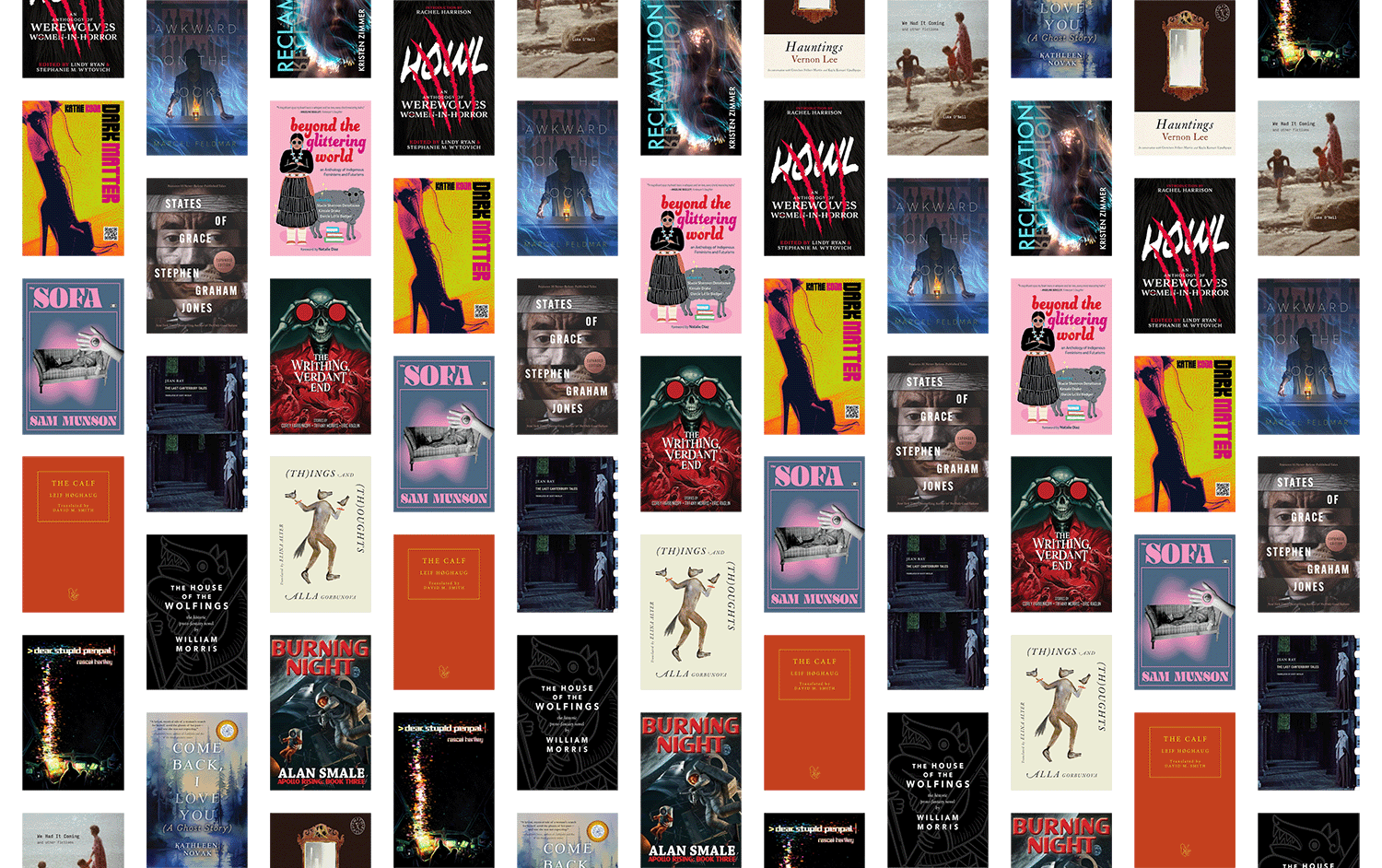
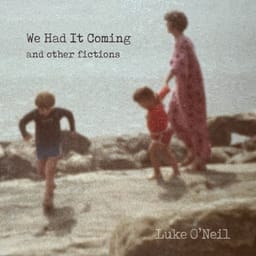
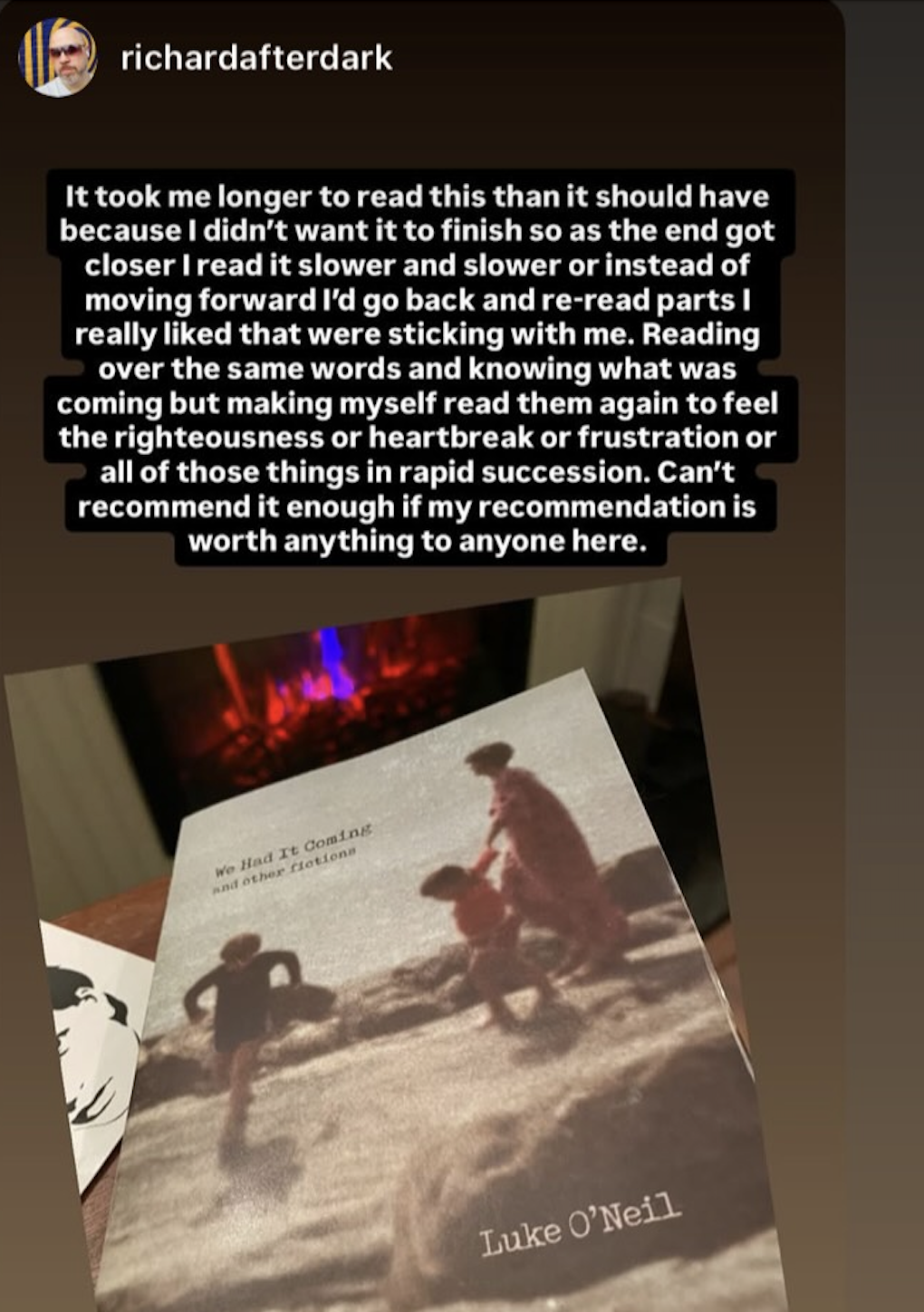
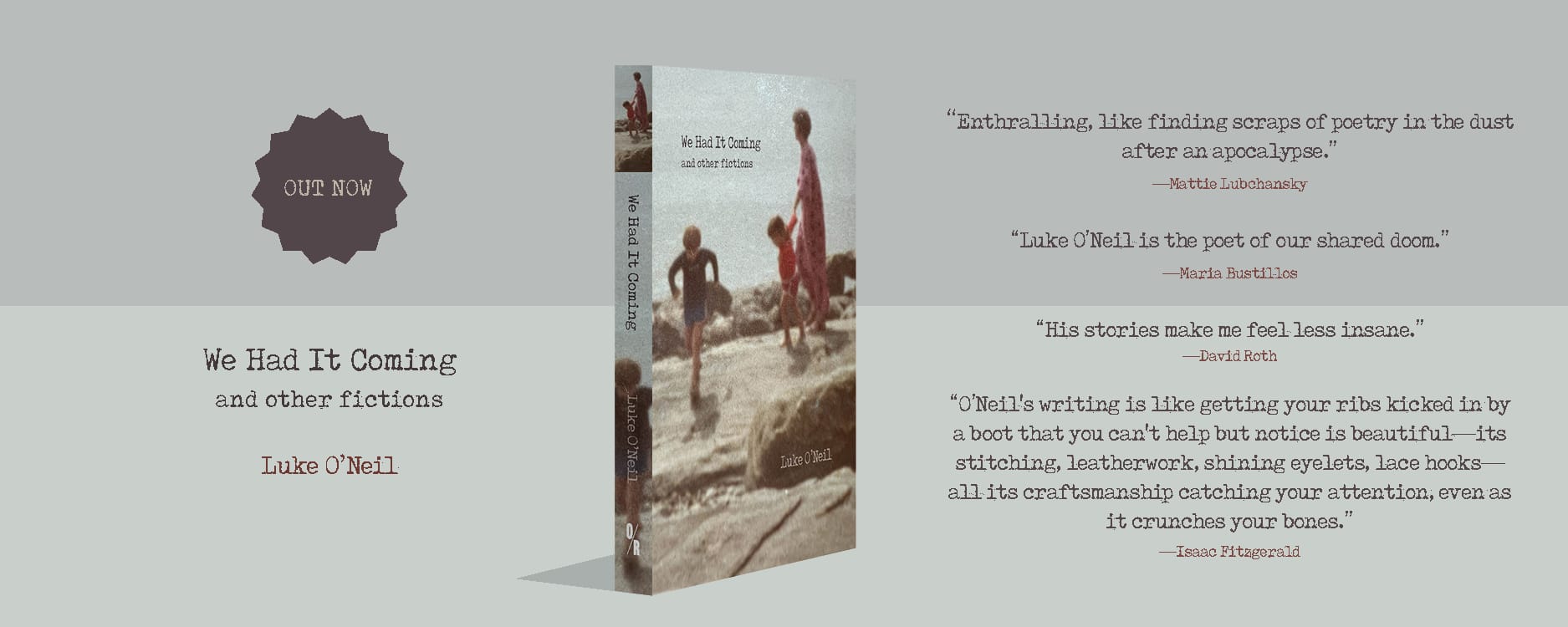
In a recent interview with Typebar Magazine, Luke O’Neil explained one of the influences on his new collection We Had It Coming. “There’s also a lot of Barthelme in there,” he said.” I feel like a lot of my characters are sort of wandering around through the absurd with a concussion.” These stories provide a bleak, surreal spin on the challenges of modern life. (OR Books; November)
Shout out to these cool people too.
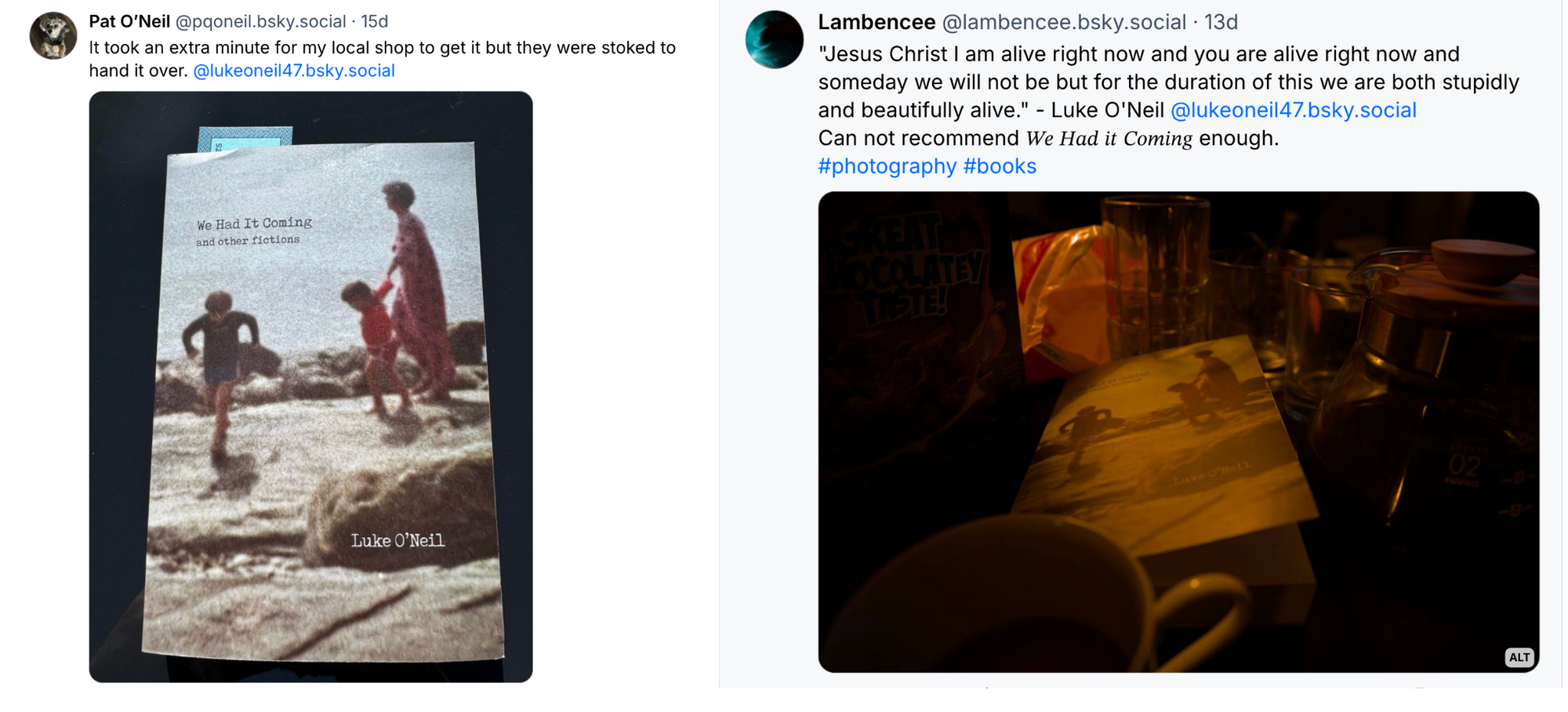
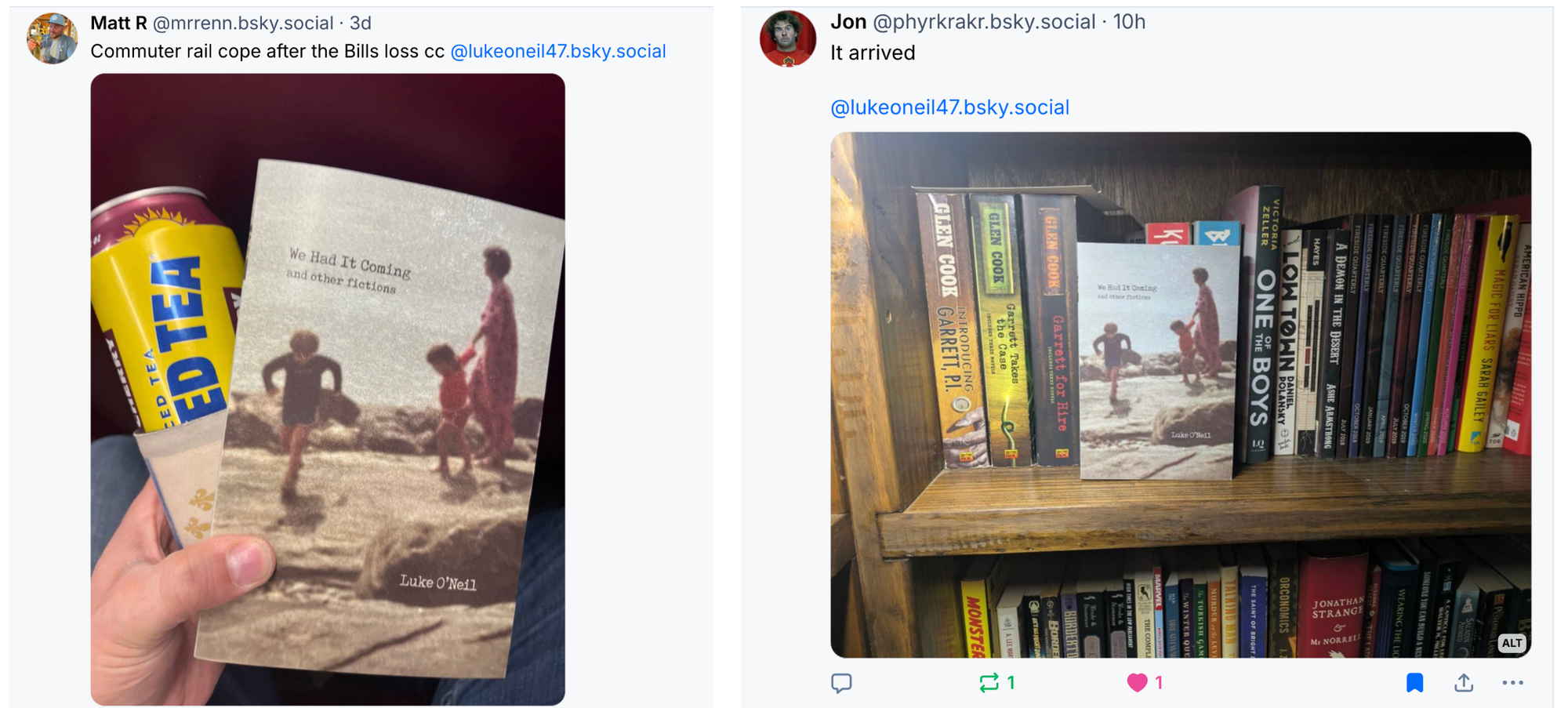
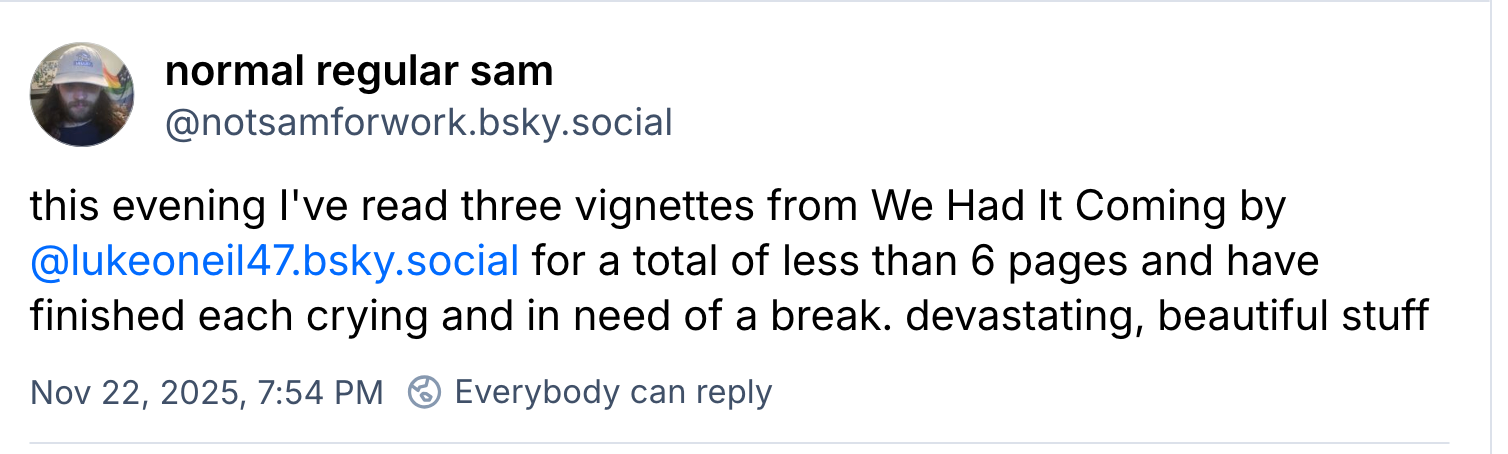
Rest in peace to Gary "Mani" Mounfield of Primal Scream and The Stone Roses. Here's a perfect song with a perfect baseline off of a perfect album full of them. Legend.
Paid readers can stick around below for my recommended reading list and the songs of the week. Thanks for being here. Hope you have a nice holiday buddy.
Read this one about The Last Waltz if you never did. A Thanksgiving classic.
 Luke O’Neil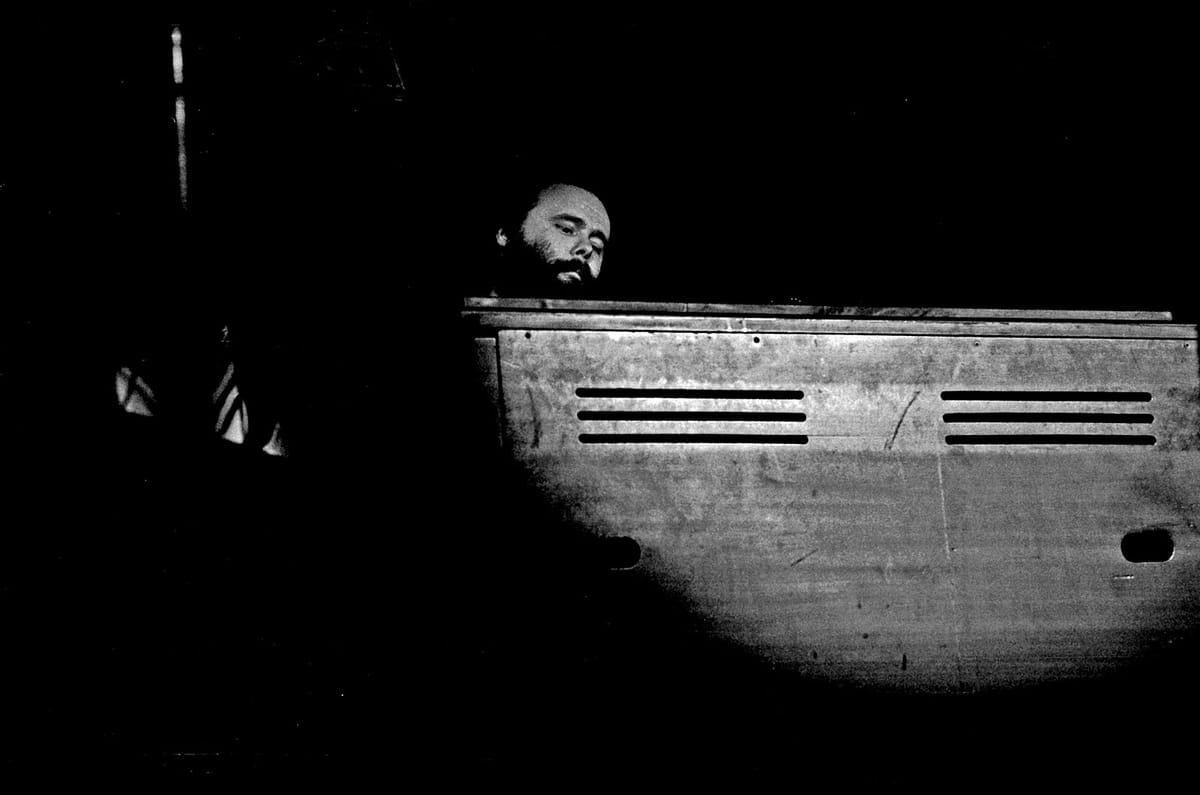
I’ve been a fan of The Band all my life thanks to my father, who had himself been a fan of The Band all his life—well, since they released Music from Big Pink in 1968, anyway. Every Thanksgiving, we would celebrate the holiday with my mother’s family in Richmond, VA, and then my father and I would excuse ourselves after the big meal to partake of our private tradition: watching Martin Scorsese’s The Last Waltz together, eating two pilfered slices of my grandmother’s chocolate chess pie, no matter how logy we were from the gravy and the sleepy heat of too much family time.
The Band’s final concert, played on Thanksgiving Day at San Francisco’s Winterland Ballroom in 1976, was infamously plagued with tension. According to Levon Helm, The Band’s drummer and singer and only American, none of the boys even wanted to stop touring together except for lead guitarist Robbie Robertson, who was so hellbent on getting off the road that the others had no choice but to give in. But all we saw watching the film was a group of five men (and nearly two dozen of their most famous friends) who know each other cold. They’ve been playing some of these songs for sixteen years, but, despite being so obviously lived-in, their performances never feel rote. Instead, my father and I nestled with pleasure into the coziness of the tunes we knew so well. These were our friends—the men or the songs, we couldn’t have said which—and we only got to see them once a year. The Band may have been pretty sick of each other by 1976, but we never got sick of them.